
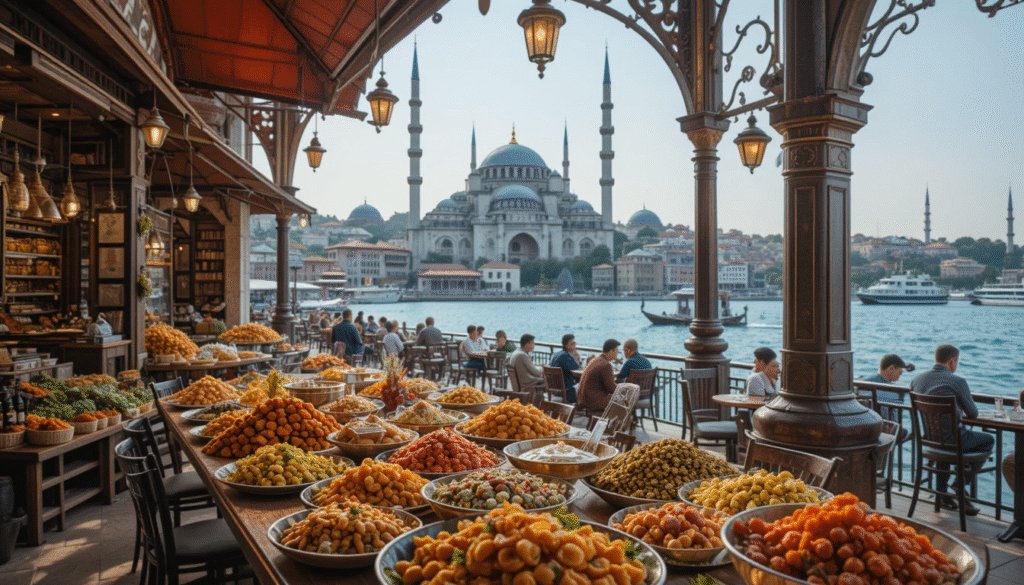
From ancient spice bazaars to cutting-edge culinary scenes, discover Istanbul’s incredible food landscape that bridges continents and centuries
Istanbul’s culinary identity is as complex and layered as the city itself. Here, where Europe meets Asia and ancient trade routes converged for millennia, food culture represents one of humanity’s greatest fusion experiments. The result is a gastronomic landscape that seamlessly blends Ottoman palace cuisine with street food traditions, Mediterranean influences with Central Asian flavors, and time-honored recipes with innovative contemporary interpretations.
In 2025, Istanbul’s food scene continues evolving while honoring its remarkable heritage. From the aromatic corridors of centuries-old spice markets to the trendy neighborhoods where young chefs reinvent Turkish classics, the city offers food experiences that satisfy every palate and curiosity. This comprehensive guide will take you through the essential food destinations and markets that define Istanbul’s culinary soul.
The Historic Heart: Traditional Markets and Time-Honored Flavors
Spice Bazaar (Mısır Çarşısı): A Sensory Journey Through Centuries
The Egyptian Bazaar, known locally as Mısır Çarşısı, stands as Istanbul’s most aromatic destination and a testament to the city’s role as a global spice trading hub. Built in 1664 as part of the New Mosque complex, this L-shaped market continues serving as the heart of Istanbul’s spice trade after more than 350 years.
Essential Spice Market Experiences:
Traditional Turkish Delight Tasting: Beyond the touristy varieties, seek out family-run shops like Koçak Baharatçısı, where third-generation spice merchants offer lokum flavored with genuine rosewater, mastic, and regional specialties like Afyon cream. The difference in quality and authenticity is immediately apparent.
Spice Education with Master Merchants: Spend time with vendors who can explain the origins and uses of dozens of spices. Learn to distinguish between different grades of saffron, understand the complex flavor profiles of various chili pepper blends, and discover spices used in traditional Turkish medicine.
Seasonal Specialties: Visit during different seasons to experience rotating specialties. Spring brings fresh herbs and early produce, summer offers dried fruit harvests, autumn features new crop nuts and spices, while winter showcases preserved foods and warming spice blends.
Hidden Gems Within the Bazaar:
- Pandeli Restaurant: Located above the bazaar, this historic restaurant has served Ottoman cuisine since 1901, featuring dishes that showcase spice market ingredients
- Traditional Turkish Coffee Roasters: Several shops still roast coffee beans using traditional methods, offering tastings that reveal the complexity of properly prepared Turkish coffee
- Herbal Tea Specialists: Discover medicinal and culinary tea blends created by herbalists whose knowledge spans generations
Grand Bazaar Food Court: Beyond Shopping
While famous for carpets and jewelry, the Grand Bazaar houses exceptional food vendors that locals frequent alongside tourists. These establishments maintain high standards because they serve knowledgeable customers daily.
Must-Visit Food Stalls:
- Şark Kahvesi: Istanbul’s oldest coffee house (1644) serving traditional Turkish coffee in an atmospheric setting unchanged for centuries
- Fes Cafe: Hidden gem offering authentic Ottoman sweets and excellent Turkish breakfast in a peaceful courtyard setting
- Traditional Lokum Makers: Watch master confectioners hand-pull Turkish delight using techniques perfected over generations
Neighborhood Food Markets: Where Locals Shop and Eat
Kadıköy Market: Asian Side Authenticity
Kadıköy’s Tuesday and Friday markets represent Istanbul’s most authentic local food shopping experience. This Asian-side neighborhood market attracts serious home cooks, professional chefs, and food enthusiasts seeking the freshest ingredients and best prices.
Market Highlights:
Fresh Produce Section: Seasonal fruits and vegetables from across Turkey, including varieties rarely found elsewhere. Spring brings wild greens (otlar) foraged from Anatolian hillsides, summer offers heirloom tomatoes and peppers, autumn features fresh nuts and late harvest fruits.
Seafood Vendors: Direct from fishing boats, offering daily catches from the Black Sea, Marmara Sea, and Aegean. Knowledgeable fishmongers provide cooking advice and can clean fish to your specifications.
Specialty Food Shops: Family-run businesses specializing in pickles, olives, cheeses, and preserved foods. Many offer tastings and can recommend pairings for complete meals.
Street Food Integration: The market seamlessly blends shopping with eating. Vendors selling fresh produce often prepare simple dishes using their ingredients, creating impromptu meals that showcase seasonal flavors.
Surrounding Culinary Scene: Kadıköy’s market district features excellent restaurants, cafes, and food shops that complement the market experience:
- Çiya Sofrası: Renowned restaurant specializing in forgotten Anatolian dishes, with ingredients sourced directly from the market
- Pandora Bookstore Cafe: Literary cafe serving excellent Turkish breakfast and light meals in a intellectual atmosphere
- Traditional Meyhanes: Traditional taverns offering meze and rakı in authentic neighborhood settings
Beşiktaş Saturday Market: Urban Food Discovery
This vibrant weekly market in the Beşiktaş district combines local shopping with excellent street food, representing modern Istanbul’s diverse culinary landscape.
Street Food Specialties:
- Gözleme Masters: Watch skilled cooks prepare these savory pancakes on traditional griddles, filled with cheese, spinach, or seasonal vegetables
- Fresh Juice Vendors: Using locally grown fruits to create seasonal juice blends not found in commercial establishments
- Regional Specialties: Vendors from different Turkish regions bring their hometown specialties, creating a mini-tour of Turkish regional cuisine
Contemporary Food Scenes: Where Tradition Meets Innovation
Karaköy: The New Culinary Capital
Once an industrial waterfront district, Karaköy has transformed into Istanbul’s most dynamic food neighborhood, where innovative restaurants coexist with traditional artisan food producers.
Standout Establishments:
Lokanta Maya: Chef Didem Şenol’s restaurant showcases modern Turkish cuisine using traditional techniques and local ingredients. The menu changes seasonally, featuring dishes that reinterpret Ottoman recipes for contemporary palates.
Karaköy Lokantası: Occupying a beautifully restored historic building, this restaurant serves refined versions of classic Turkish dishes. Their breakfast menu alone justifies a visit, featuring artisanal cheeses, house-made jams, and freshly baked bread.
Craft Coffee Culture: Karaköy leads Istanbul’s third-wave coffee movement with roasters like Coffee Manifesto and Petra Roasting Company offering single-origin Turkish beans and international varieties.
Artisan Food Producers:
- Traditional Bakeries: Wood-fired ovens producing exceptional bread using heritage grain varieties
- Craft Chocolate Makers: Small-batch chocolatiers creating unique flavors inspired by Turkish ingredients
- Specialty Cheese Shops: Featuring both traditional Turkish cheeses and international varieties, with knowledgeable staff providing tasting opportunities
Beyoğlu: International Fusion and Local Innovation
The historic Beyoğlu district continues evolving as Istanbul’s international dining destination while maintaining strong connections to local food traditions.
Contemporary Turkish Cuisine:
Mikla: Chef Mehmet Gürs’s rooftop restaurant offers “New Anatolian Kitchen” cuisine that reimagines Turkish regional dishes using modern techniques. The restaurant’s commitment to local sourcing and seasonal menus makes it essential for understanding contemporary Turkish cuisine.
Pandeli: This Art Nouveau restaurant above the Spice Bazaar serves refined Ottoman cuisine in an atmospheric setting. Their lunch menu features traditional dishes prepared with exceptional attention to historical authenticity.
International Influence with Local Character:
- Wine Bars: Showcasing Turkish wines alongside international selections, often featuring Turkish meze as accompaniments
- Fusion Restaurants: Creative combinations of Turkish ingredients with international techniques, reflecting Istanbul’s cosmopolitan character
- Vegetarian and Vegan Options: Growing scene reflecting changing dietary preferences while incorporating Turkish vegetarian traditions
Street Food Culture: The Soul of Istanbul’s Culinary Scene
Istanbul’s street food represents the city’s most democratic and accessible culinary tradition. These foods developed to serve the city’s working population and continue providing excellent, affordable meals for everyone from construction workers to business executives.
Classic Street Foods You Must Try
Döner Kebab Origins: While döner has spread globally, Istanbul’s versions maintain superior quality through traditional preparation methods. Seek out establishments that roast their own meat and serve with freshly baked bread and house-made sauces.
Balık Ekmek (Fish Sandwich): Best experienced at Eminönü’s floating restaurants, where fishermen grill fresh catch and serve it in crusty bread with simple salad and lemon. This simple dish embodies Istanbul’s relationship with the sea.
Kokoreç: This Ottoman-era street food consists of seasoned lamb intestines grilled over charcoal and served in bread. While challenging for some visitors, it represents an important part of Istanbul’s culinary heritage.
Seasonal Street Specialties:
- Roasted Chestnuts: Winter street vendor staple providing warmth and sustenance during cold months
- Fresh Corn: Summer favorite grilled over charcoal and seasoned with salt and spices
- Şalgam Suyu: Fermented turnip juice served as a refreshing drink, particularly popular during hot weather
Modern Street Food Evolution
Contemporary Istanbul street food reflects the city’s evolving tastes while maintaining traditional preparation methods and social functions.
Food Trucks and Modern Vendors: New generation of street food entrepreneurs offering elevated versions of classic dishes alongside international street foods adapted for Turkish tastes.
Night Markets: Evening food markets in neighborhoods like Kadıköy and Beşiktaş featuring both traditional and innovative street foods, creating social gathering spaces that extend dining into entertainment.
Specialty Food Districts: Themed Culinary Neighborhoods
Sultanahmet: Tourist-Friendly Traditional Cuisine
While often criticized for catering to tourists, Sultanahmet’s better restaurants provide excellent introductions to Turkish cuisine for visitors unfamiliar with local flavors.
Recommended Experiences:
- Hotel Restaurant Terraces: Rooftop dining with views of major monuments, serving refined Turkish cuisine in atmospheric settings
- Traditional Kebab Houses: Family-run establishments serving regional kebab varieties with authentic preparation methods
- Ottoman Sweet Shops: Specializing in palace desserts and traditional confections, offering cultural context alongside tastings
Fatih: Conservative District, Authentic Flavors
The Fatih district maintains more conservative social customs while offering some of Istanbul’s most authentic traditional cuisine, particularly specialties from Turkey’s eastern regions.
Cultural Food Experiences:
- Regional Turkish Restaurants: Establishments serving specialties from specific Turkish regions, often run by families who maintain traditional recipes
- Traditional Tea Houses: Social gathering spaces where men play backgammon and discuss current events over endless glasses of tea
- Religious Holiday Specialties: During Islamic holidays, the district features special foods and sweets prepared according to religious traditions
Seasonal Food Calendar: When to Visit for Specific Experiences
Istanbul’s food culture changes dramatically with the seasons, offering different experiences throughout the year.
Spring (March-May): Fresh Beginnings
Seasonal Highlights:
- Wild Greens Season: Foraged plants appear in markets and restaurants, prepared in traditional ways that showcase their unique flavors
- Early Fruit Harvest: Strawberries, apricots, and early cherries from nearby farms
- Spring Cleaning Foods: Traditional belief in seasonal detoxification leads to increased consumption of herbal teas and cleansing foods
Market Visits: Spring markets feature the year’s most diverse produce as winter storage foods overlap with early spring harvests.
Summer (June-August): Peak Abundance
Summer Specialties:
- Tomato Season: Turkish tomatoes reach peak flavor, featured in simple preparations that showcase their quality
- Seafood Abundance: Warm weather brings increased fishing activity and varied catches
- Cooling Foods: Traditional summer dishes designed to provide relief from heat while maintaining nutrition
Outdoor Dining: Summer enables extensive terrace and garden dining, with many restaurants opening seasonal outdoor spaces.
Autumn (September-November): Harvest Celebrations
Autumn Flavors:
- Nut Harvest: Fresh walnuts, hazelnuts, and chestnuts appear in both sweet and savory preparations
- Preserving Season: Traditional food preservation activities create seasonal specialties like pickles, jams, and dried fruits
- Comfort Food Return: Cooler weather brings return of hearty stews, soups, and warming spices
Festival Foods: Autumn religious and cultural festivals feature special foods prepared specifically for celebrations.
Winter (December-February): Warming Traditions
Winter Warmth:
- Hot Beverages: Traditional warming drinks like salep, hot türk kahvesi, and spiced teas become essential
- Preserved Foods: Winter reliance on preserved summer abundance creates unique flavor combinations
- Holiday Specialties: New Year and religious holidays bring special sweets and ceremonial foods
Indoor Market Culture: Cold weather makes covered markets particularly appealing, creating cozy shopping and eating experiences.
Food Tour Strategies: Making the Most of Your Culinary Adventure
Planning Your Food Exploration
Appetite Management: Istanbul’s food abundance can overwhelm unprepared visitors. Plan lighter meals between major food experiences and consider sharing dishes to try more variety.
Cultural Sensitivity: Understanding basic dining customs enhances experiences and shows respect for local culture. Learn appropriate ways to decline food politely and understand tipping customs.
Dietary Restrictions: Istanbul accommodates most dietary restrictions, but communication is essential. Learn key Turkish phrases for common allergies and preferences.
Budget Considerations for Food Tourism
Street Food Economy: Excellent street food remains very affordable, allowing budget travelers to eat well while experiencing authentic local flavors.
Market Shopping: Buying ingredients at local markets and preparing simple meals can stretch food budgets while providing cultural experiences.
Restaurant Range: Istanbul offers everything from very affordable neighborhood restaurants to expensive fine dining, allowing visitors to match experiences with budgets.
Health and Safety Considerations
Food Safety Standards: Istanbul’s food establishments generally maintain good hygiene standards, but use common sense precautions, especially with street food.
Water and Ice: Tap water is generally safe, but bottled water is widely available. Ice in established restaurants is typically safe.
Spice and Heat Levels: Turkish cuisine includes spicy dishes, but heat levels are generally moderate. Ask about spice levels if you’re sensitive to hot foods.
Bringing Istanbul Home: Shopping for Turkish Food Ingredients
Essential Turkish Ingredients to Purchase
Spices and Seasonings:
- Pul Biber: Turkish red pepper flakes with distinctive flavor different from standard crushed red pepper
- Sumak: Tangy purple spice essential for Turkish salads and meat dishes
- Za’atar Variations: Turkish versions of this Middle Eastern spice blend
Specialty Products:
- Turkish Tea: High-quality black tea from the Black Sea region
- Rose Water and Orange Blossom Water: Essential for Turkish desserts and beverages
- Pomegranate Molasses: Concentrated pomegranate juice used in both sweet and savory dishes
Preserved Foods:
- Turkish Olives: Varieties not commonly available elsewhere, including unique preparation methods
- Pickled Vegetables: Traditional pickle combinations that complement Turkish meals
- Turkish Honey: Regional varieties with distinctive flavors reflecting local flora
Shopping Strategies for Food Souvenirs
Quality Assessment: Learn to evaluate quality for items like spices (freshness, color, aroma) and preserved foods (appearance, packaging integrity).
Quantity Planning: Consider weight restrictions for air travel and choose concentrated flavors that provide maximum impact with minimal weight.
Shipping Options: Some specialty shops offer international shipping for larger purchases or items that might not travel well in luggage.
The Future of Istanbul’s Food Scene
Istanbul’s culinary landscape continues evolving as new influences merge with traditional foundations. Understanding current trends provides insight into where the city’s food culture is heading.
Emerging Trends in 2025
Sustainability Focus: Increasing emphasis on locally sourced ingredients, reduced food waste, and environmentally conscious preparation methods.
Regional Rediscovery: Young Turkish chefs exploring forgotten regional dishes and traditional preparation methods, bringing authentic flavors to contemporary settings.
Health Consciousness: Growing interest in traditional Turkish foods recognized for health benefits, including fermented foods, herbal preparations, and ancient grains.
Technology Integration: Modern food delivery, reservation systems, and social media marketing changing how restaurants operate while traditional establishments maintain classical approaches.
Preserving Culinary Heritage
Master-Apprentice Relationships: Traditional knowledge transfer continues through family businesses and formal apprenticeship programs, ensuring authentic techniques survive.
Cultural Documentation: Increased efforts to document traditional recipes, techniques, and food customs before they disappear.
Tourism Balance: Managing tourism growth to support traditional food businesses without overwhelming local food culture or pricing out local customers.
Conclusion: A Feast for All Senses
Istanbul’s food and market culture offers one of the world’s richest culinary experiences, where every meal tells a story and every market visit reveals new layers of cultural complexity. From the aromatic spice bazaars that have perfumed the city for centuries to the innovative restaurants reimagining Turkish cuisine for contemporary palates, Istanbul rewards curious food lovers with endless discoveries.
The city’s culinary landscape succeeds because it maintains deep respect for tradition while embracing innovation and change. Ancient recipes coexist with contemporary interpretations, street food vendors serve alongside fine dining establishments, and local markets thrive despite modern shopping alternatives. This balance creates a food culture that satisfies both residents’ daily needs and visitors’ desire for authentic experiences.
Whether you’re savoring your first Turkish delight in the Spice Bazaar, sharing meze with new friends in a Beyoğlu meyhane, or discovering regional specialties in Kadıköy’s market, Istanbul’s food scene connects you to the city’s soul. Every bite reveals the influence of geography, history, and culture that makes Istanbul unique among world cities.
The markets and restaurants featured in this guide represent starting points for your own culinary exploration. Istanbul’s greatest food experiences often happen spontaneously – following an enticing aroma down a narrow street, accepting an invitation to share tea with a shopkeeper, or discovering a neighborhood restaurant that serves dishes you’ve never encountered before.
Pack your appetite, bring your curiosity, and prepare to understand why Istanbul has nourished travelers for millennia. The city’s tables are set, the markets are bustling, and flavors that span continents and centuries await your discovery.
Afiyet olsun – may it be good for your health – as they say in Turkish. Your Istanbul food adventure begins now.